The revolutionary cradle
Between 1770 and 1775 the friction between Boston and the British Crown turned into open rebellion. The events are compressed into a few downtown blocks, which is why the Freedom Trail can string them together on a single walk from the Common to Charlestown.
Massacre, Tea Party, and the road to war
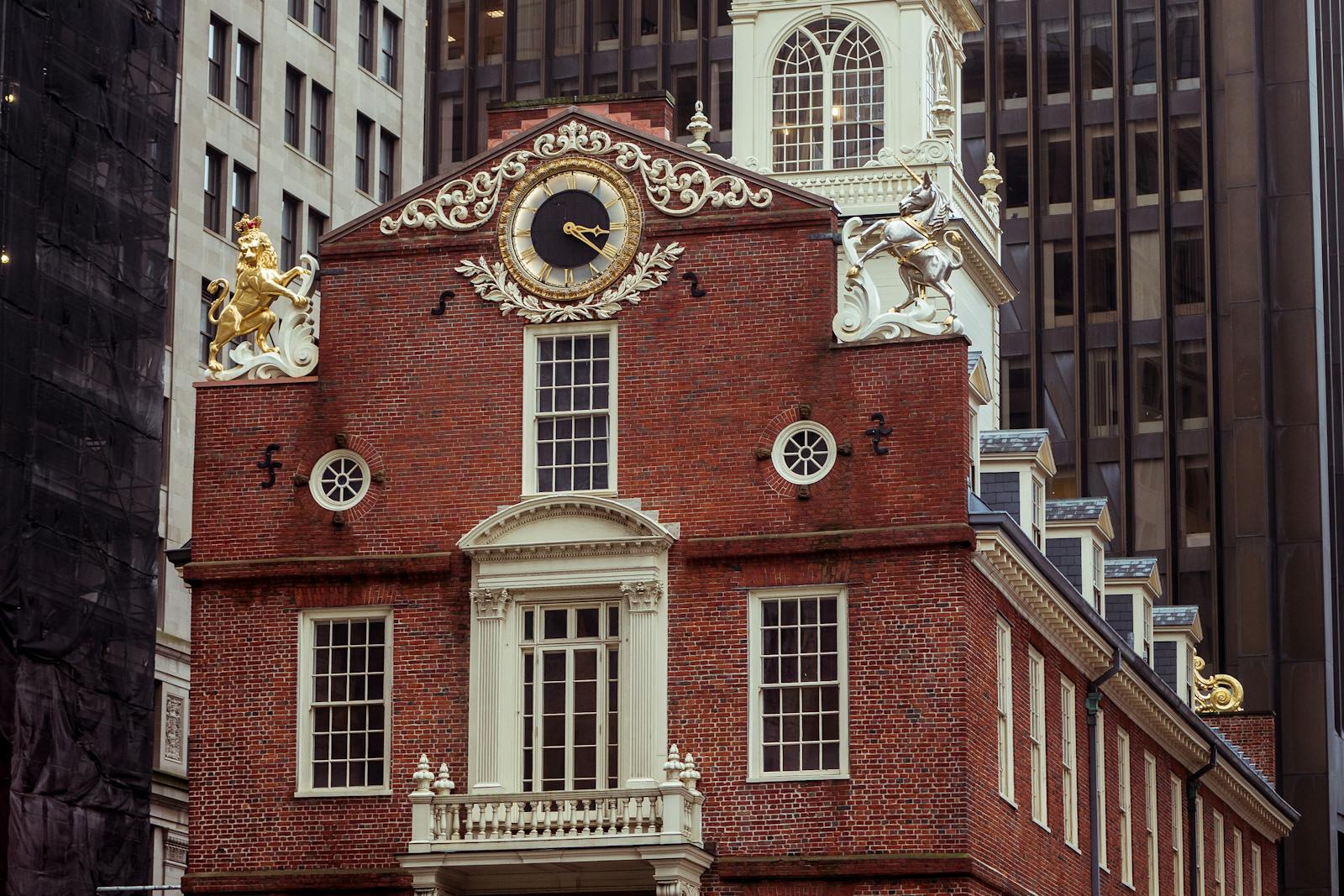
British troops had occupied Boston since 1768 to enforce unpopular customs duties. On March 5, 1770, soldiers fired into a hostile crowd outside the customs house by the Old State House, killing five — among them Crispus Attucks, a man of African and Native descent who became one of the first to die in the cause. The killings, quickly named the Boston Massacre, hardened colonial opinion.
Resistance escalated at the harbor. On the night of December 16, 1773, colonists protesting the East India Company's tea monopoly boarded three ships and threw 342 chests of tea into the water — the Boston Tea Party. Britain answered with the Coercive Acts, and within eighteen months the dispute had become a war.
Bunker Hill and the walkable record
On the night of June 16, 1775, New England militia fortified Breed's Hill above Charlestown. The next afternoon British regulars took the position at heavy cost in the Battle of Bunker Hill, burning much of Charlestown in the process. The colonists lost the ground but proved they could stand against a professional army.
Much of this history survives within walking distance. The Old North Church and the Paul Revere House — the latter built around 1680 and the oldest building in downtown Boston — sit in the North End, and the Freedom Trail links them with the Massacre site, Faneuil Hall, and the Bunker Hill Monument. It is an unusually concentrated way to read a revolution on foot.
Reviewed source trail
- Boston Massacre — National Park Service — checked 2026-06-24
- Boston Tea Party Timeline — National Park Service — checked 2026-06-24
- Paul Revere House — National Park Service — checked 2026-06-24