The academic and medical capital
Long before it was a technology hub, Boston was a college town — the oldest in the country. Universities and teaching hospitals are now the region's economic core, clustered across the river in Cambridge and in the Longwood medical district.
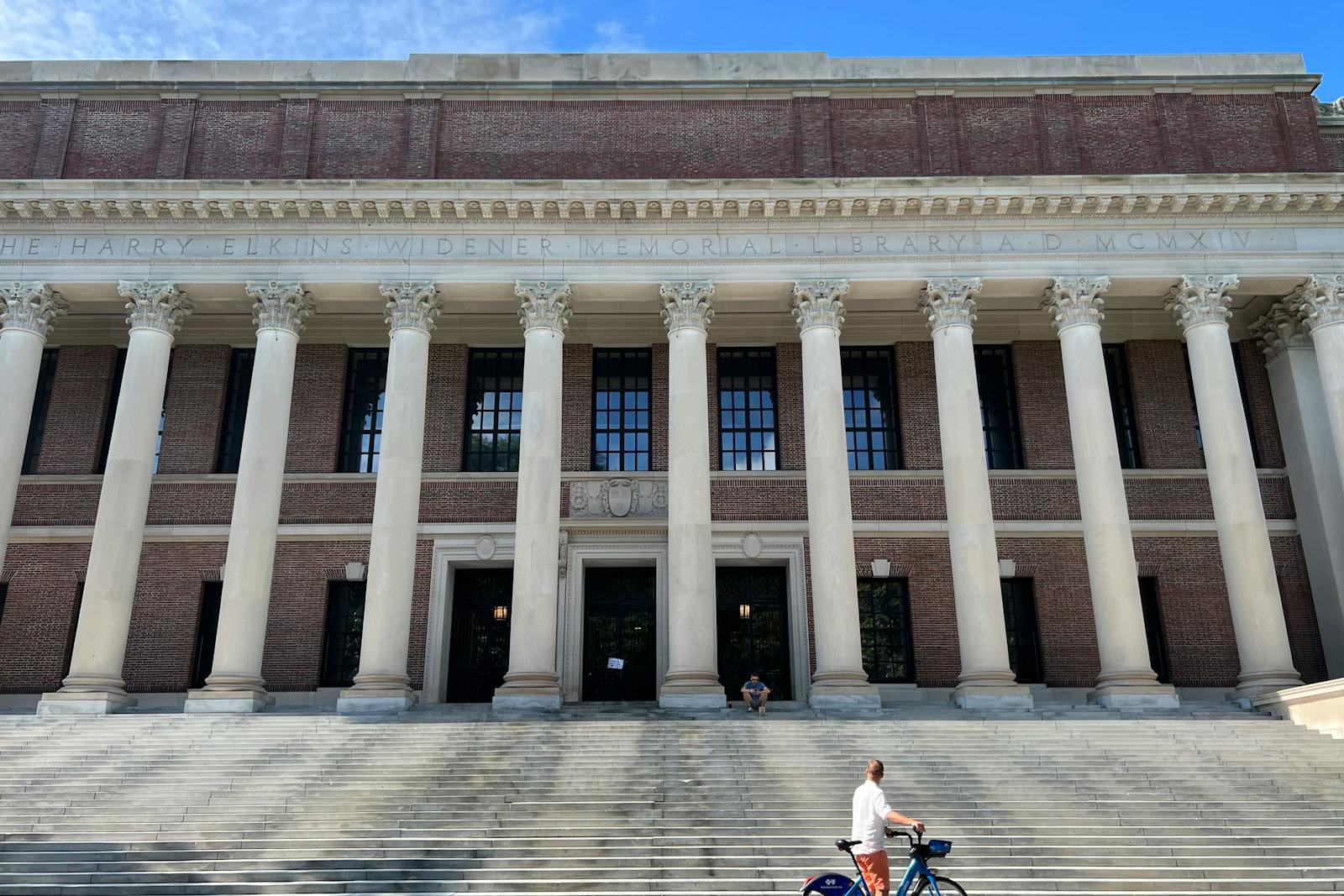
The oldest college in the country
In 1636, only six years after the founding, the General Court of the Massachusetts Bay Colony voted £400 toward a college, and the institution that became Harvard opened in Cambridge in 1638 — the oldest institution of higher education in the United States. It took its name from John Harvard, a young minister who left it half his estate and his library of some four hundred books.
That early commitment to schooling set a pattern. The Charles River separates Boston proper from Cambridge, where Harvard and, after it relocated across the river in 1916, the Massachusetts Institute of Technology now sit within a few miles of each other — one of the densest concentrations of research universities anywhere.
Hospitals as a second campus
The same instinct built a medical capital. The Longwood Medical Area, on the Fenway side of the city, packs together major teaching hospitals and the medical schools attached to them, drawing patients and researchers from far beyond New England. Together with the universities, these institutions are the steady engine under the modern regional economy.
For a visitor this academic-medical weight is practical, not abstract. It explains why graduation weekends and conference seasons fill the hotels, why the Fenway and Longwood district has its own rhythm, and why a stay there sits close to both ballgames and hospital campuses.
Reviewed source trail
- History timeline — Harvard University — checked 2026-06-24
- The history of Harvard University — checked 2026-06-24